The Harvey House: A Timeless Queen Anne Masterpiece in the Heart of Radford, Virginia
There are homes that offer comfort, homes that reflect architectural beauty, and then there are extraordinary residences that preserve an entire chapter of American history.
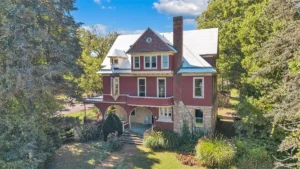
The Harvey House in Radford, Virginia, belongs to the latter category. Built in 1891 during a period of remarkable industrial growth and prosperity, this magnificent Queen Anne residence stands as a testament to the craftsmanship, elegance, and architectural ambition of America’s Gilded Age. With its distinctive design, beautifully preserved historic features, and fascinating family history, the Harvey House is far more than an impressive residence. It is a treasured piece of Virginia’s architectural heritage.
Recognized on both the National Register of Historic Places and the Virginia Landmarks Register, the Harvey House represents a rare opportunity to experience the character and grandeur of nineteenth-century residential architecture. Offering approximately 5,081 square feet of finished living space, six bedrooms, two-and-a-half bathrooms, and approximately 1.1 acres of beautifully established grounds, the property combines historic significance with remarkable possibilities for its next chapter.
A Remarkable Legacy Rooted in Virginia History
The story of the Harvey House begins in 1891, when Radford was experiencing significant industrial expansion and economic development. During this transformative period, the city was becoming an important center of activity in southwestern Virginia, attracting business leaders, entrepreneurs, and families who contributed to its growing prosperity.
The residence was originally constructed for J. K. Dimmick, general manager of the Radford Land Improvement Company. Its impressive scale and elaborate architectural design reflected the confidence and optimism of the era. In 1906, the property was acquired by Lewis Harvey, whose family would remain closely connected to the residence for generations.
Through the years, the house witnessed changing times while retaining its distinctive identity. Its walls have stood through generations of American history, preserving the atmosphere of an earlier period when architectural craftsmanship, decorative artistry, and attention to detail were central to residential design.
Today, the Harvey House remains an important reminder of Radford’s historical development and the people who helped shape the community.
Queen Anne Architecture at Its Finest
The Harvey House is an exceptional example of Queen Anne architecture, a popular Victorian-era style celebrated for its picturesque appearance, asymmetrical compositions, elaborate ornamentation, and creative use of materials.
From the moment visitors approach the property, the residence makes an unforgettable impression. Its distinctive rooflines, decorative exterior shingles, ornate detailing, and graceful turret create an architectural composition filled with visual interest. A sweeping curved veranda further enhances its character, offering an elegant transition between the house and its surrounding landscape.
The exterior reflects the artistic spirit of the late nineteenth century, when architects and builders embraced individuality and decorative expression. Rather than relying on simple geometric forms, Queen Anne residences often incorporated contrasting textures, varied roof shapes, intricate woodwork, and distinctive architectural features.
At the Harvey House, these elements come together beautifully. Every angle reveals another detail, creating a residence that feels both grand and inviting. Its carefully composed exterior gives the impression of a home designed not simply for practical living but also to make a lasting architectural statement.
An Interior Filled With Historic Character
Stepping inside the Harvey House reveals an equally impressive world of historic craftsmanship. The interior retains many of the architectural details that make nineteenth-century residences so distinctive, offering a sense of authenticity and elegance that is increasingly difficult to find.
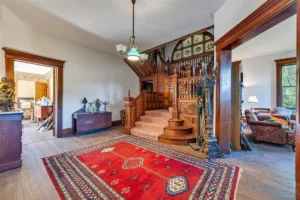
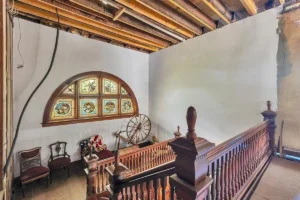
One of the property’s most remarkable features is its magnificent handcrafted cherry wood staircase. Rich in detail and artistry, the staircase showcases intricate carving, elegant balustrades, and exceptional millwork. It serves as a striking centerpiece, drawing the eye upward and establishing an immediate sense of grandeur.
Above the staircase, an exquisite stained-glass window depicting the Four Seasons adds another layer of artistic beauty. Its colorful imagery and carefully arranged details create a captivating focal point, bringing natural light into the interior while celebrating the decorative traditions of the Victorian era.
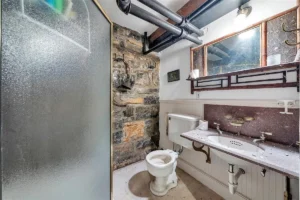
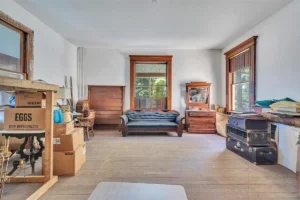
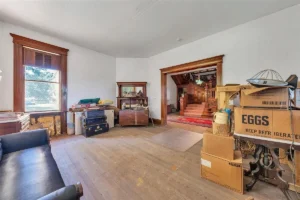
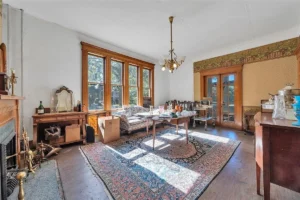
Throughout the residence, original hardwood floors, substantial wood moldings, paneled doors, decorative fireplaces, and historic windows with their original wavy glass contribute to the home’s remarkable character.
These details are more than decorative elements. They represent the skill and dedication of the craftsmen who created the residence more than a century ago. Each carved detail, carefully finished surface, and distinctive architectural feature tells part of the home’s story.
Generous Living Spaces and Endless Possibilities
With approximately 5,081 square feet of finished living space, the Harvey House offers an expansive floor plan designed around the generous proportions characteristic of its era.
The six-bedroom layout provides considerable flexibility, while the multiple gathering rooms create opportunities for entertaining, relaxation, and everyday living. Soaring ceilings enhance the feeling of openness, and the substantial architectural details throughout the interior give each room a distinctive atmosphere.
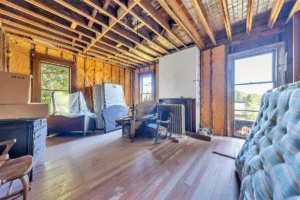
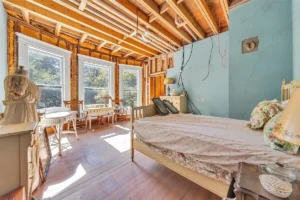
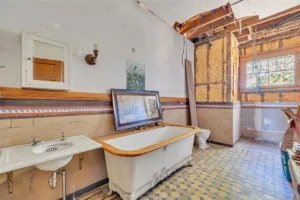
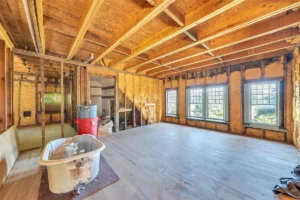
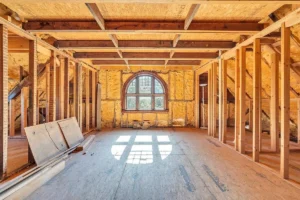
The spacious bedrooms provide comfortable private retreats, while additional upper-level areas offer opportunities for future owners to explore their own ideas and preferences.
The home’s scale also makes it particularly interesting for those who appreciate historic properties with adaptable living arrangements. Whether maintained as an extraordinary private residence, thoughtfully configured for multigenerational living, or developed into a historically inspired hospitality destination, the property offers possibilities that extend well beyond conventional residential use. Any alternative commercial or hospitality use would, of course, be subject to applicable zoning, preservation requirements, and other necessary approvals.
The balance between formal entertaining areas and comfortable everyday spaces makes the Harvey House an especially appealing example of historic residential design.
A Restoration Guided by Respect for the Past
One of the most compelling aspects of the Harvey House is its history of preservation and restoration.
Beginning in 1974, an extensive restoration project was undertaken with a commitment to respecting the residence’s original architectural character. Rather than simply modernizing the property, the restoration involved careful research into the home’s historic appearance and decorative details.
Historic wallpaper patterns were researched and recreated, while attention was also given to carpeting, exterior colors, decorative finishes, and architectural elements. This thoughtful approach helped preserve the atmosphere and visual identity of the original residence.
At the same time, modern mechanical improvements were incorporated to support contemporary comfort and functionality.
Among these improvements is a water-source heat pump system utilizing underground piping and an exterior heat-exchange arrangement for heating and cooling. This technology represents an interesting combination of modern building systems and historic architecture, demonstrating how an older residence can benefit from updated infrastructure while retaining its distinctive character.
The restoration reflects decades of dedication and an appreciation for the importance of preserving historically significant buildings. It also highlights the responsibility involved in caring for a property whose architectural features cannot easily be replaced.
Beautiful Grounds and Historic Outbuildings
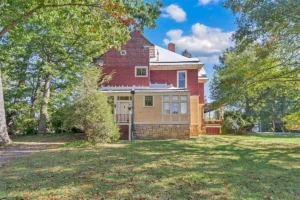
The appeal of the Harvey House extends beyond its impressive interior and architectural exterior. Set on approximately 1.1 acres, the property features mature trees, established landscaping, and picturesque outdoor surroundings that complement the residence beautifully.
The grounds create a sense of privacy and tranquility while providing a setting appropriate to the home’s historic character. Mature trees contribute shade and seasonal beauty, while established landscaping enhances the overall presentation of the property.
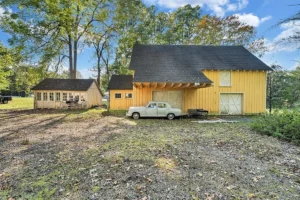
Adding further interest is a historic carriage house, a reminder of the transportation and lifestyle traditions of the late nineteenth and early twentieth centuries. Additional workshop and outbuilding space provides practical versatility and creates further opportunities for future use.
Together, the residence, carriage house, and surrounding grounds form a distinctive historic property that offers much more than a traditional residential setting.
A Rare Opportunity to Preserve an Architectural Treasure
Historic homes such as the Harvey House occupy a special place in the American architectural landscape. Their significance comes not only from their age or size but also from the stories they preserve, the craftsmanship they demonstrate, and their connection to the communities in which they stand.
The Harvey House brings together all these qualities. Its Queen Anne architecture, handcrafted interior details, remarkable stained-glass window, historic restoration, and connection to Radford’s industrial past make it an exceptional property.
For someone who appreciates architectural history, the residence offers an opportunity to live surrounded by the artistry of another era. For a preservation-minded owner, it presents the meaningful responsibility of continuing the work of those who have carefully maintained it over the decades.
Its potential as a private estate, architectural showcase, or historically inspired hospitality property further demonstrates its versatility, subject to applicable approvals and preservation considerations.
The Next Chapter of the Harvey House
More than 130 years after its construction, the Harvey House continues to tell a remarkable story. It speaks of Radford’s growth, the ambitions of its original owners, the craftsmanship of Victorian-era builders, and the dedication of those who recognized the importance of preserving its architectural legacy.
From its graceful turret and sweeping veranda to its magnificent cherry staircase and Four Seasons stained-glass window, every element contributes to a residence of extraordinary distinction.
The Harvey House is not simply a beautiful historic home. It is a living connection to Virginia’s past, a celebration of American architectural artistry, and a reminder that exceptional craftsmanship can endure across generations.
For its next steward, the opportunity is to embrace this remarkable legacy while creating a meaningful future for one of Radford’s most distinguished historic residences. The Harvey House stands ready to begin its next chapter, carrying forward the elegance, character, and timeless beauty that have defined it since 1891.