Pittock Mansion(2025)- All You Need To Know Before You Go
Pittock Mansion: The Legacy of a Family and the Rise of a City
Built in 1914, Pittock Mansion tells the story of Portland’s transformation from a rugged pioneer town into a vibrant, modern, industrialized city.
More than just a grand home on a hill, the mansion is a symbol of the city’s growth, resilience, and the visionary spirit of one of its most influential families—the Pittocks.
Through their legacy, Portland’s history comes alive, one stone and story at a time.

Beginnings on the Frontier
Henry Lewis Pittock arrived in Oregon in 1853 at the age of 19. Like many ambitious young men of the time, he traveled west on the Oregon Trail, leaving behind a modest life in Pittsburgh, Pennsylvania, to seek opportunity in the developing Pacific Northwest.
He began working as a typesetter for The Oregonian, a small but determined newspaper in Portland.

At the time, Portland was little more than a muddy frontier settlement littered with tree stumps—earning it the nickname “Stumptown.” Roads were rough, industries were just taking shape, and the city’s future was uncertain.
But where others saw obstacles, Henry Pittock saw potential. In 1860, he married Georgiana Burton, a strong-willed and civic-minded young woman who had also crossed the plains with her family in search of a new beginning.

Henry’s fortunes turned dramatically when, in lieu of back pay, he was given ownership of The Oregonian. Under his leadership, the newspaper grew to become the most powerful publication in the Pacific Northwest, granting him both influence and wealth.
But Henry was more than a newspaper man; he was a true entrepreneur. Over the years, he built a business empire that included real estate, railroads, banking, timber, paper mills, and even silver mining. He was also a passionate outdoorsman and among the first groups of non-Native climbers to reach the summit of Mount Hood.
Georgiana Pittock, meanwhile, left her own mark on Portland through her deep commitment to community causes. She championed women’s rights, founded charities, supported single working women, and played a pivotal role in creating the Portland Rose Society, which would later give rise to the beloved Portland Rose Festival.

A House in the Sky
By the early 20th century, Portland had begun to shed its frontier image. It was a growing city filled with ambition and culture. It was during this period that Henry Pittock decided to build a home worthy of his family’s legacy—and of Portland’s new place in the modern world.
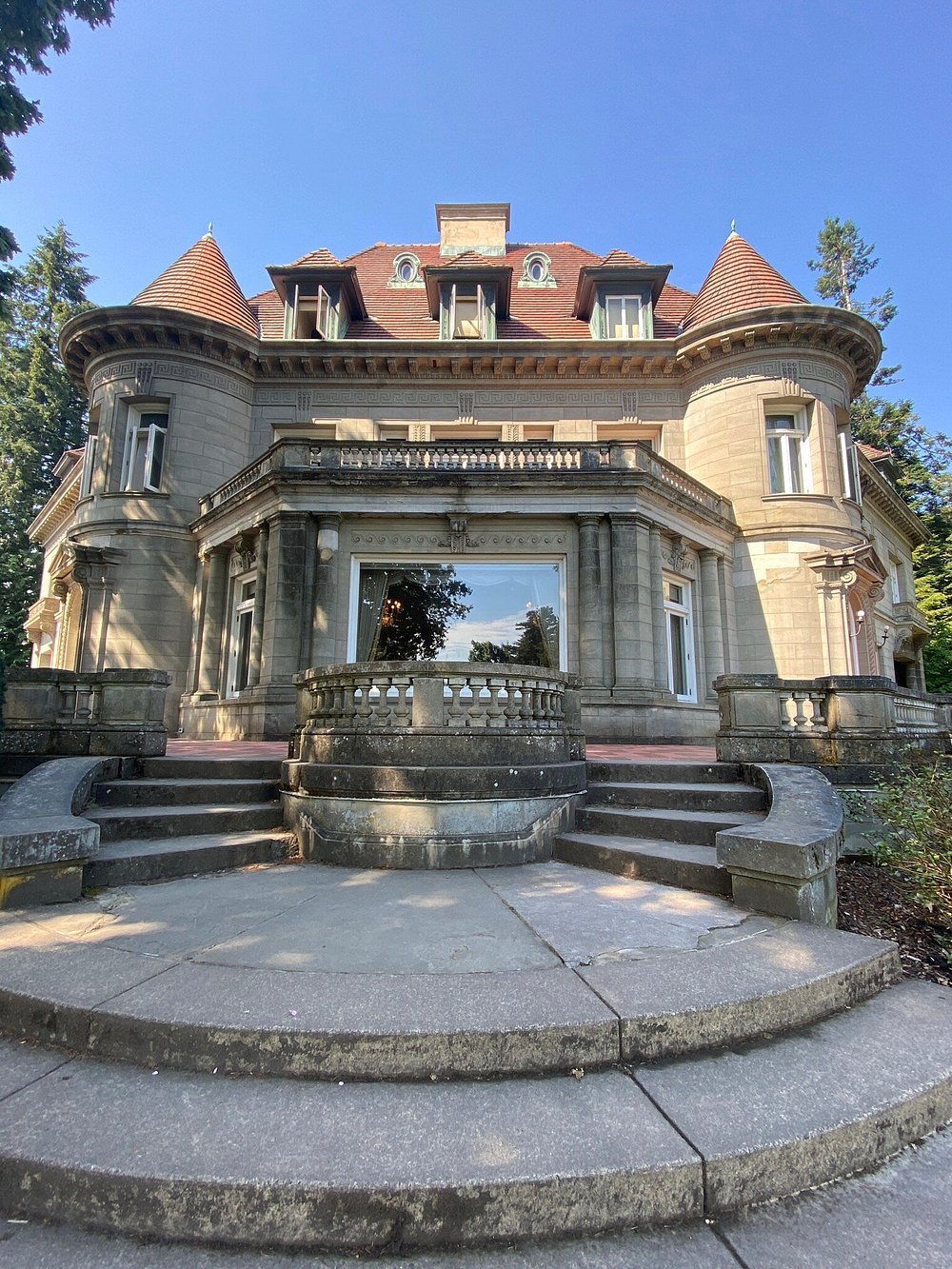
In 1909, construction began on what would become Pittock Mansion. Located high in the West Hills, 1,000 feet above the city, the site offered sweeping views of Portland, the Willamette River, and, on clear days, the majestic peaks of the Cascade Range. The location was symbolic: a house that looked over the very city the Pittocks had helped shape.
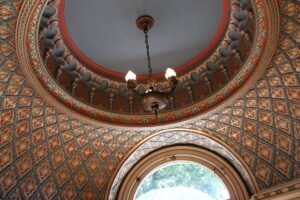
The mansion was designed with both beauty and innovation in mind. Though its exterior reflected a French Renaissance style, the interior was a blend of eclectic designs: a Jacobean library, a French drawing room, a Turkish smoking room, and Edwardian bedrooms.
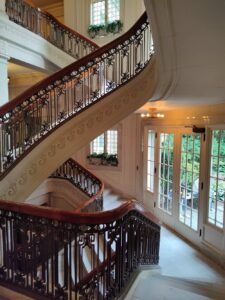
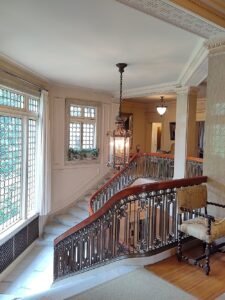
The mansion featured 23 rooms, each crafted with the finest materials—ornate wood paneling, marble floors, carved fireplaces, and intricate ceiling details.

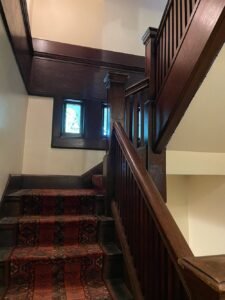
What set the house apart, however, were its modern amenities. Pittock Mansion was equipped with innovations rarely seen in private homes at the time: a central vacuum system, intercoms, indirect lighting, a walk-in refrigerator, and even an elevator—installed to accommodate Georgiana, who had suffered a stroke during the home’s construction.
The mansion was a fusion of old-world elegance and cutting-edge technology, a reflection of Henry’s embrace of progress.
Georgiana’s love of gardening was evident throughout the estate. She oversaw the planting of formal rose gardens and flower beds, filling the grounds with the same blooms she helped make central to Portland’s cultural identity.
The home became a gathering place for multiple generations of the Pittock family—children, grandchildren, and extended relatives all lived there at various times.

A Family’s End, and a House at Risk
Georgiana Pittock passed away in 1918, only four years after the family moved into their new home. Her death was followed by Henry’s in 1919. Though their time in the mansion was brief, their legacy was already deeply rooted in Portland’s identity.
The mansion remained in the family for decades, but by the late 1950s, the remaining family members had moved out. The house, once filled with laughter, elegance, and energy, stood quiet and aging.
In 1962, a devastating windstorm known as the Columbus Day Storm tore across the region, severely damaging the mansion. Roof tiles were ripped away, windows shattered, and water seeped into the grand halls. The estate was in danger of being demolished, and developers began eyeing the valuable land for new construction.
But Portlanders weren’t ready to let go of this iconic landmark.

Saved by the City
Recognizing the mansion’s historical and cultural importance, the community rallied. With widespread public support and fundraising efforts, the City of Portland purchased the property in 1964.
Restoration began almost immediately. Craftspeople—some of whom had worked on the original house—were brought in to repair intricate woodwork, replace damaged materials, and return the mansion to its former glory.
In 1965, Pittock Mansion opened to the public as a historic house museum. Over the years, it has welcomed countless visitors, offering them not only a glimpse into the life of one extraordinary family but also a window into the city’s remarkable journey.

A Lasting Legacy
Today, Pittock Mansion is more than a museum—it is a symbol. A symbol of ambition, resilience, and community pride. Its panoramic views remind visitors of how far Portland has come since its early days as a muddy logging town. Its architecture reflects the values of its builders: elegance, innovation, and a belief in the future.
The mansion’s survival was not guaranteed. That it stands today, lovingly preserved and open to all, is a testament to the power of community and the importance of remembering where we come from.
Inside, each room tells a story—not just of wealth or influence, but of family, perseverance, and the building of a city. Outside, the roses still bloom as they did when Georgiana planted them, their colors as vibrant as the legacy she left behind.
In the end, Pittock Mansion is not just about one family. It is about all of Portland—its history, its evolution, and the people who have shaped it. From the humblest stump-filled streets to the heights of the West Hills, it is a place that continues to inspire, to teach, and to endure.