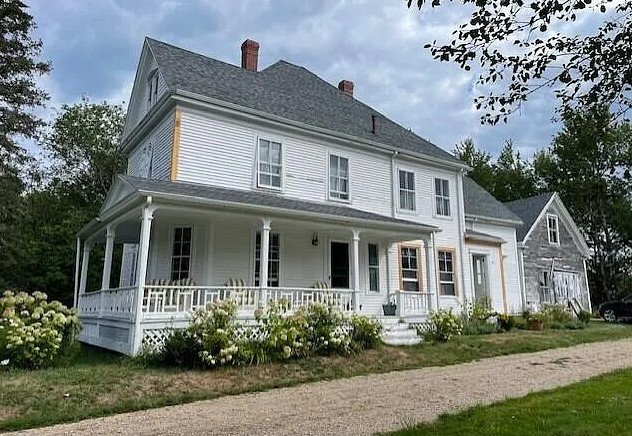
Pretty details inside! C. 1850. On 1 1/2 acres in Maine. $269,000
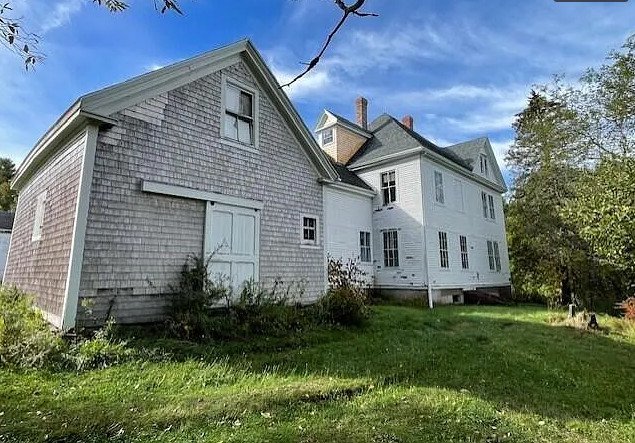
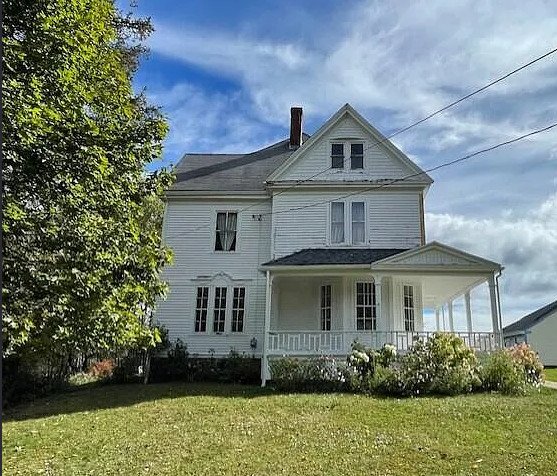
There are certain homes that seem to invite storytelling the moment you first see them. Nestled gently into 1.5 acres of leafy green in Cherryfield, Maine, this 1850 Victorian feels like one of those rare places where generations have left subtle fingerprints of memory while preserving the architecture that makes old houses irresistible. Its character isn’t loud, flashy, or overly restored—it’s felt in the details, the hand-crafted elements, and the thoughtful spaces that defined 19th-century Maine homes.
Cherryfield is known as the “Blueberry Capital of the World,” and this house fits beautifully into that rural setting, tucked back just enough from the road to feel private yet still connected to the historic village. Its setting delivers that quietly romantic sense of New England peace: lawns that invite morning dew, the hush of pine trees, and land spacious enough for gardens, chickens, or simply a hammock and good book on a summer afternoon.
A Welcoming Wrap-Around Porch
The exterior greets visitors with a wonderful wrap-around porch—a defining feature of mid-19th century Maine homes. Extending roughly six feet deep and stretching nearly thirty feet long, the porch offers a multi-season space to enjoy changing colors and shifting light. From morning coffee to late-evening thunderstorms, it seems destined to be a favorite spot for anyone who lives here.
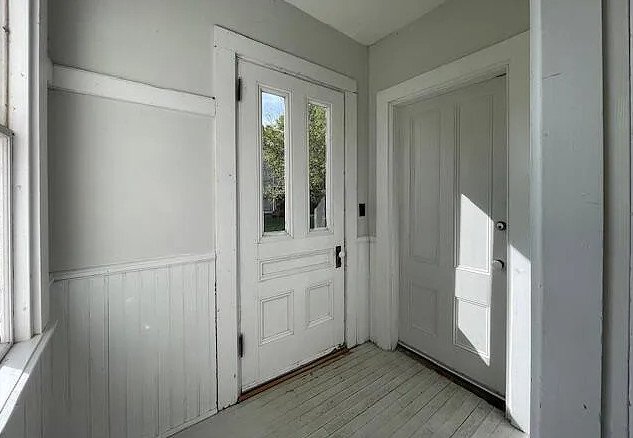
That porch leads into the main living areas, where the interior architecture begins to unfold in subtle layers.
Interior Craftsmanship Preserved
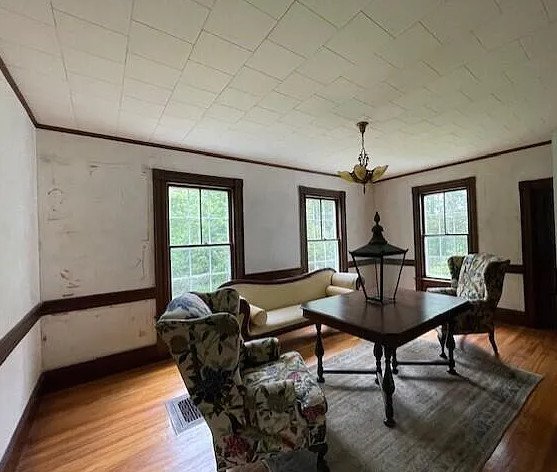
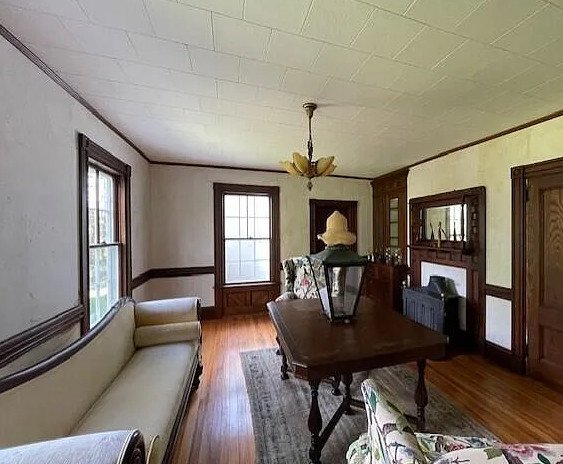
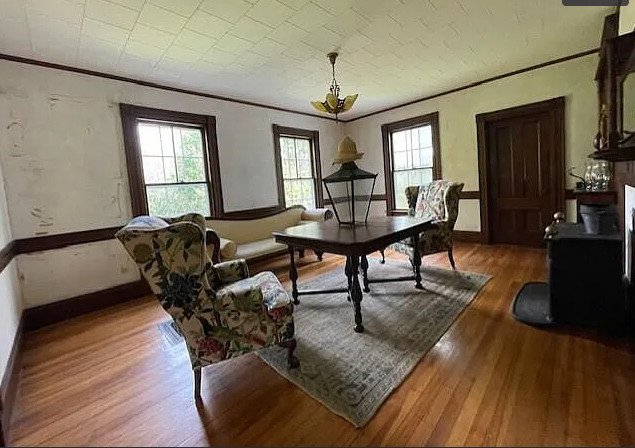
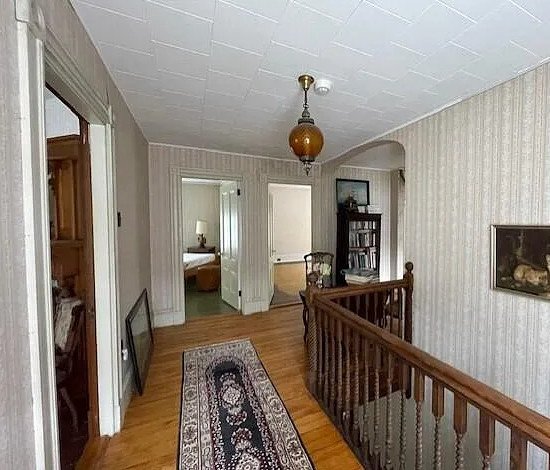
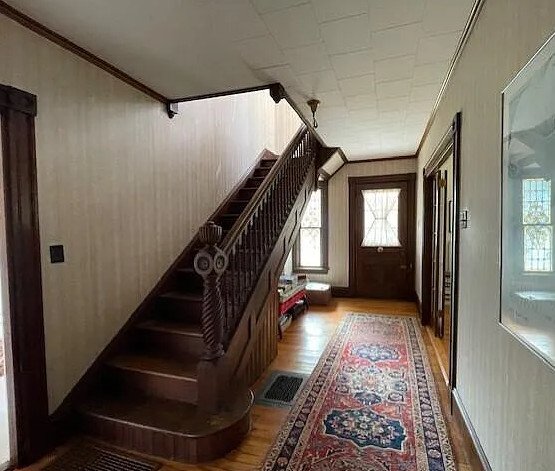
Inside the home, the first impression is warmth. Not just from light, but from wood—rich grain, original floors, and moldings that remind you how much craftsmanship mattered long before mass production became the norm.
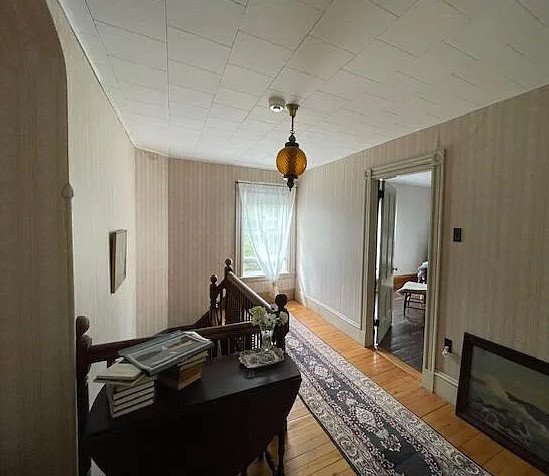
The flooring, likely hardwood extracted from regional forests, shows the gentle patina that only decades can produce. Baseboards and chair rails trace the rooms with a quiet elegance, framing the walls like picture edges, while the staircase offers one of the home’s showpieces: a beautifully turned newel post marking the rise to the second floor.
In an age when features are glued on, printed, or stamped, these details stand out as the real thing, shaped by human hands.
Rooms Designed for Living, Gathering, and Working
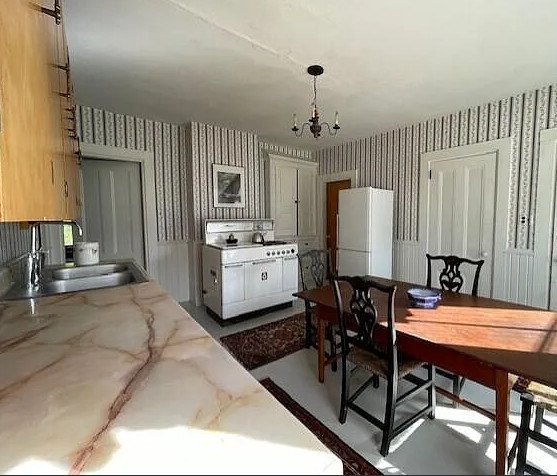
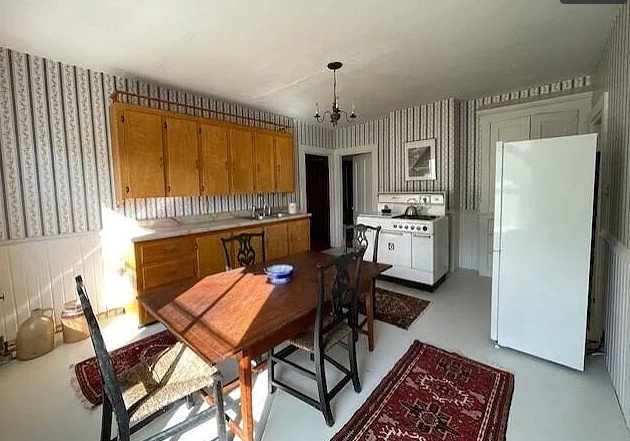
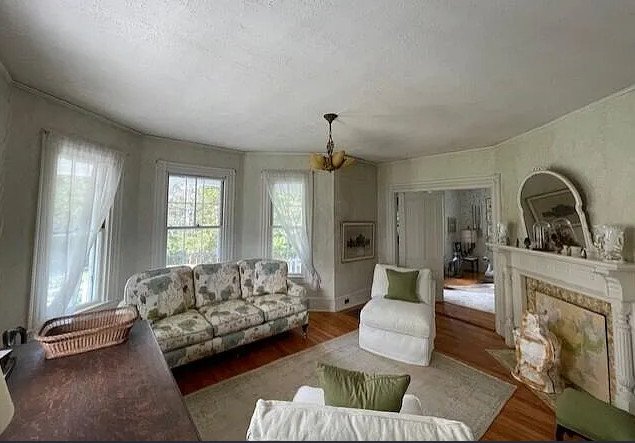
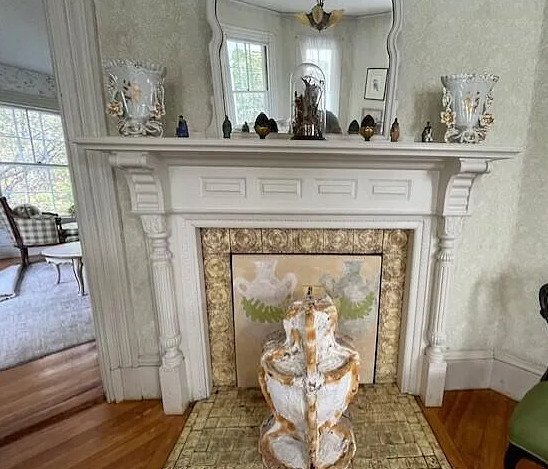
The main floor holds spaces that balance practicality and charm. The formal dining room includes a pass-through china cabinet—one of those wonderfully vintage features that bridges the dining room to the eat-in kitchen, allowing dishes to glide from one space to another. In both rooms, fireplaces lend comfort and historical ambiance. Imagine winter evenings when wood crackles while supper simmers nearby.
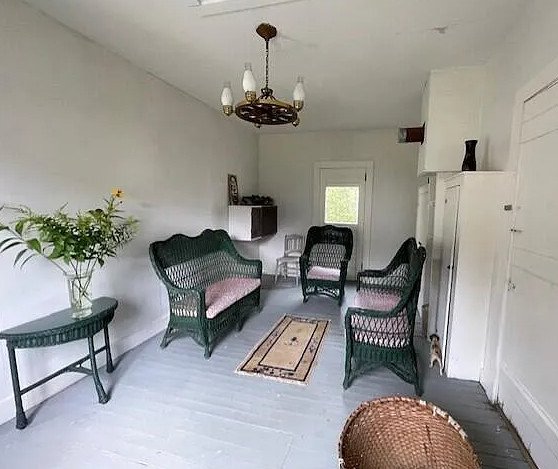
The kitchen is complemented by something rarely found today: a summer kitchen, tucked off the main structure. Traditionally, this room allowed cooking during hotter months without filling the main house with heat. Today, its uses are limited only by imagination—gardening hub, craft room, canning space, or even an artist’s workshop.
There is also a full basement and up-to-date electrical systems, meaning the house balances its historical personality with essential modern support.
A Second Floor for Rest, Creativity, and Discovery
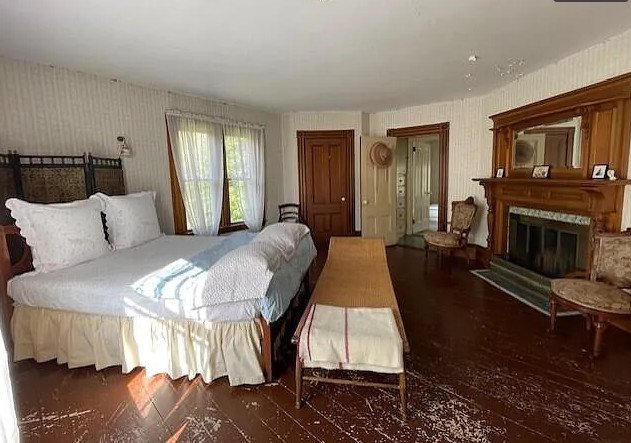
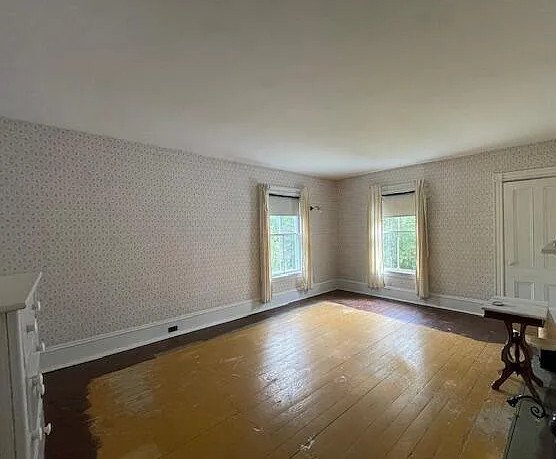
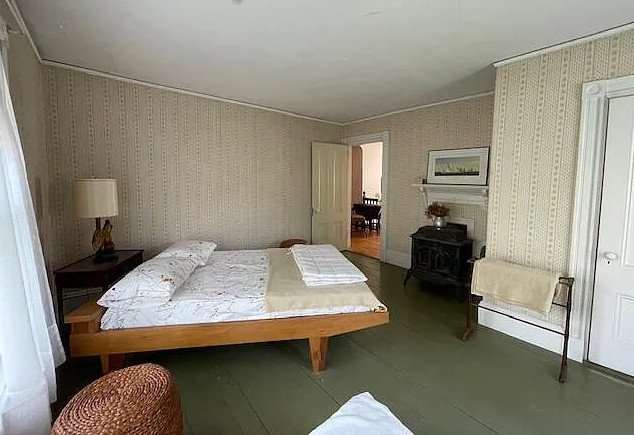
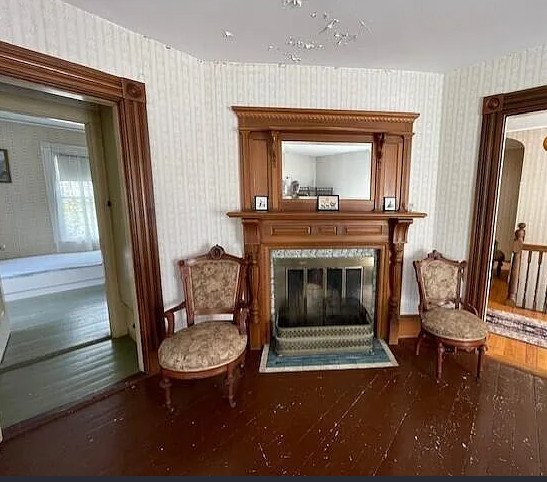
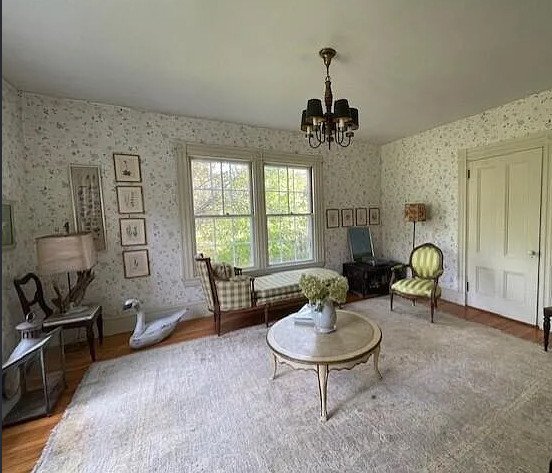
Upstairs, the home’s history spreads through three large bedrooms, each with generous proportions that older homes often deliver. One of the bedrooms includes its own fireplace, an uncommon and delightful luxury—perfect for a reading nook, writing space, or simply an especially cozy retreat.
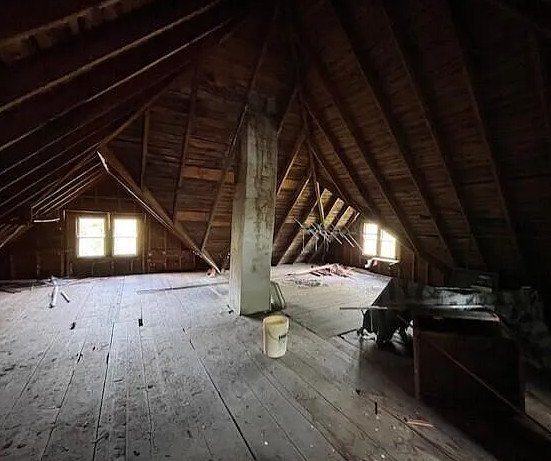
A small sewing room connects the second floor to the attic. The placement tells a story: in the 19th century, attics doubled as storage and workspace, and sewing rooms sat where daylight was best. Today, the room could serve as a studio, small office, or walk-in closet, and the attic beyond hints at expansion potential.
Carriage House and Acreage to Dream With
Outside, a 25-by-20-foot carriage house retains the rugged charm of its working past. It now functions as a garage or workshop, standing ready for tools, bikes, boats, or recreation gear.
With one and a half acres surrounding it, the landscape offers privacy and possibility—fruit trees, wildflower patches, or simply space to breathe.