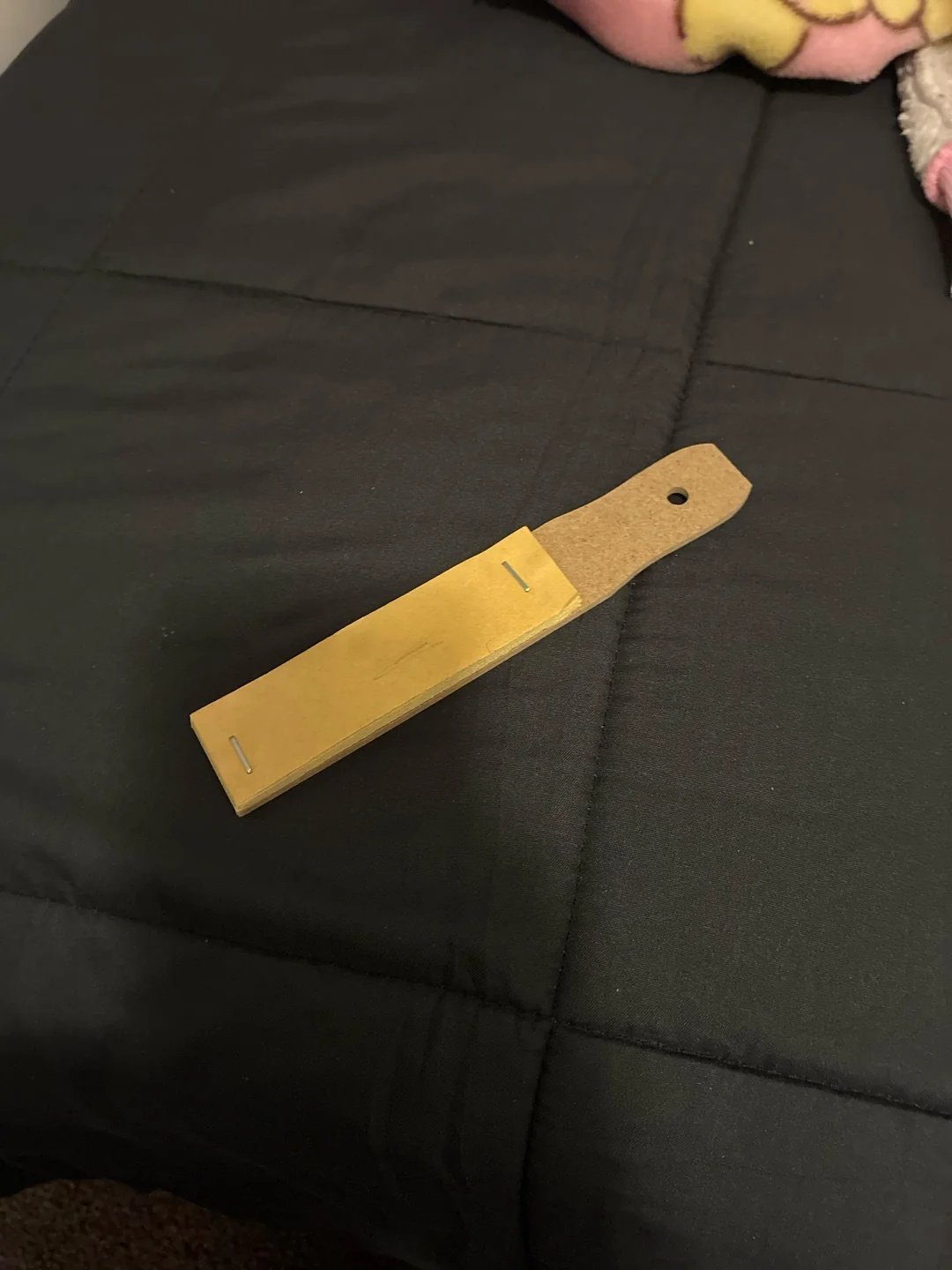
What is this thing and what is it for?
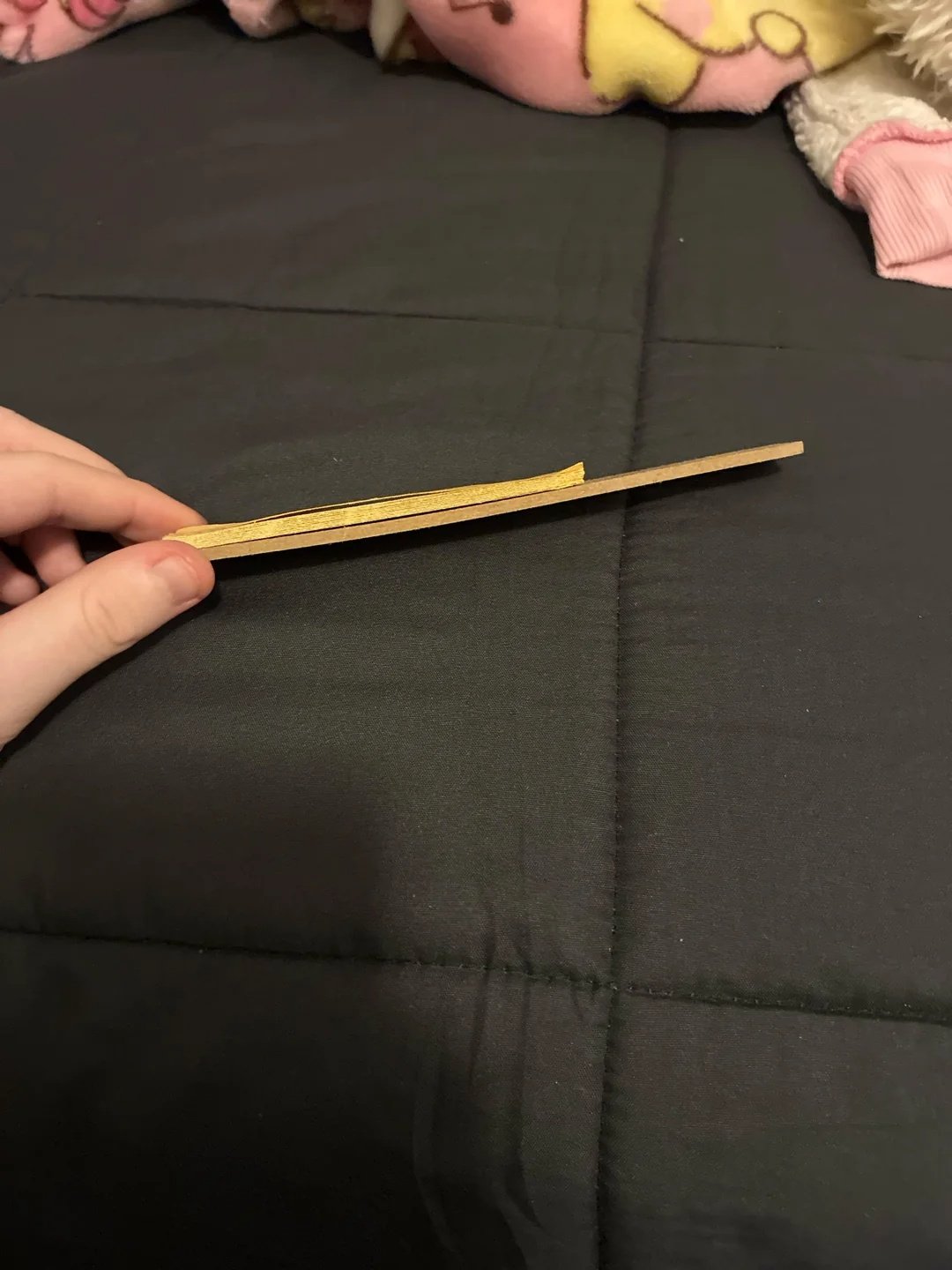
I found this thing in the bottom of a drawer while I was packing boxes. I don’t know what it is or what I do with it. It has a stack of really thin paper on it and it’s made from that weird wood/cardboard crossover stuff. I scribbled on it with a pencil assuming it was from some sort of art set, but I still don’t get it. I can’t think of what uses it would have?
———————————-
There’s a special thrill that comes with cleaning out drawers—especially the forgotten ones buried deep under everyday life.
These tucked-away spaces become accidental museums, storing odd scraps and relics of hobbies long abandoned, projects postponed, or generations who lived in the home before.
In this case, the discovery is a puzzling little object: a compact slab made of that familiar wood-pulp material—thicker than paper, but softer than true wood—topped with a neat stack of ultrathin sheets.
Lightweight. Portable. But without context, almost cryptic.
Not a notebook. Not quite a sketch pad.
And scribbling over it with a pencil didn’t clarify the mystery.
So what exactly is it?
A Closer Look at the Clues
Every part of the object hints at intention:
-
The sheets are unusually thin—closer to carbon or tracing material than standard paper.
-
They’re layered in a stack rather than bound at the edge like a pad.
-
The stiff backing suggests manipulation—pressure was meant to be applied.
-
And its size—small enough to tuck into a drawer—supports a tool rather than a keepsake.
These details point to a very specific category of objects: transfer media.
Possibility #1: A Carbon Copy Transfer Pad
Before digital duplication—and even before every home had a photocopier—one of the simplest ways to reproduce writing was carbon paper.
But fully bound carbon books were expensive.
Many homes used stacked transfer pads instead:
-
You placed the thin sheet beneath your writing surface.
-
As you wrote on top, graphite or ink pressure copied the text onto another page below.
-
The worn sheet went to the bottom and the next fresh layer was used.
This allowed families to:
-
keep a copy of receipts
-
duplicate handwritten lists
-
save messages for housemates
-
track expenses or inventories
If the back side of a sheet leaves residue when rubbed, this theory fits nicely.
Possibility #2: Embossing or Rubbing Craft Sheets
Another surprisingly common use for thin stacked paper is for texture rubbings, often found in children’s art kits.
In the 70s through early 2000s, manufacturers included:
-
plastic plates with raised designs
-
a pad of very thin paper
-
crayons or pencils for rubbing
Kids pressed the paper over a pattern and shaded to reveal images.
Today, without the plates, the paper remains a head-scratcher—looking like something but connecting to nothing.
If the texture feels slick or slightly waxy, it might belong to an art set missing its companion tools.
Possibility #3: A Perforated Note or Memo Slip Block
Some households used tear-off note sheets—like early Post-it predecessors—made cheaply from pulp stock.
These blank slips were:
-
tucked beside phones
-
placed near address books
-
used for meal planning, grocery notes, messages to family
The cardboard backing let the stack live anywhere—from kitchen counters to junk drawers.
If the sheets tear easily and leave little pulp fibers, this explanation holds.
Possibility #4: Old-Fashioned Dressmaking or Tailor’s Transfer Paper
Anyone in the home ever sew or quilt?
Tailors and home seamstresses used carbon-like tracing paper to mark patterns onto fabric using a smooth tracing wheel.
The sheets were:
-
ultrathin
-
pressure-responsive
-
often neutral in color
Without the wheel—or without knowing what it connects to—it reads like a stack of strange paper on a flimsy board.
The Most Likely Identity
Given the combination of:
-
very thin, pressure-smudging paper
-
a stiff compressed backing
-
and discovery in a drawer rather than an art bin
A transfer or carbon sheet pad is the best overall fit.
Someone in the home likely used it to duplicate quick notes—maybe decades ago:
-
a grocery list copied for two people
-
a phone number captured while another housemate was away
-
handwritten check stubs or ledger entries
We forget that simple household tasks once relied on clever, low-tech workarounds.
An Object With a Quiet Purpose
Whatever exact variant this object is—carbon pad, tailor’s tracer, or rubbing sheet—it served one defining function:
to transfer information from one surface to another.
Not a sketchbook.
Not a keepsake.
But a tool from a time before screens, printers, and instant sharing.
A tiny artifact of everyday problem solving—rediscovered by accident in the back of a drawer.
And that may be the best part:
In the process of packing up, you stumbled not just on a scrap of paper, but on a whisper of how someone before you organized their world—one thin sheet at a time.