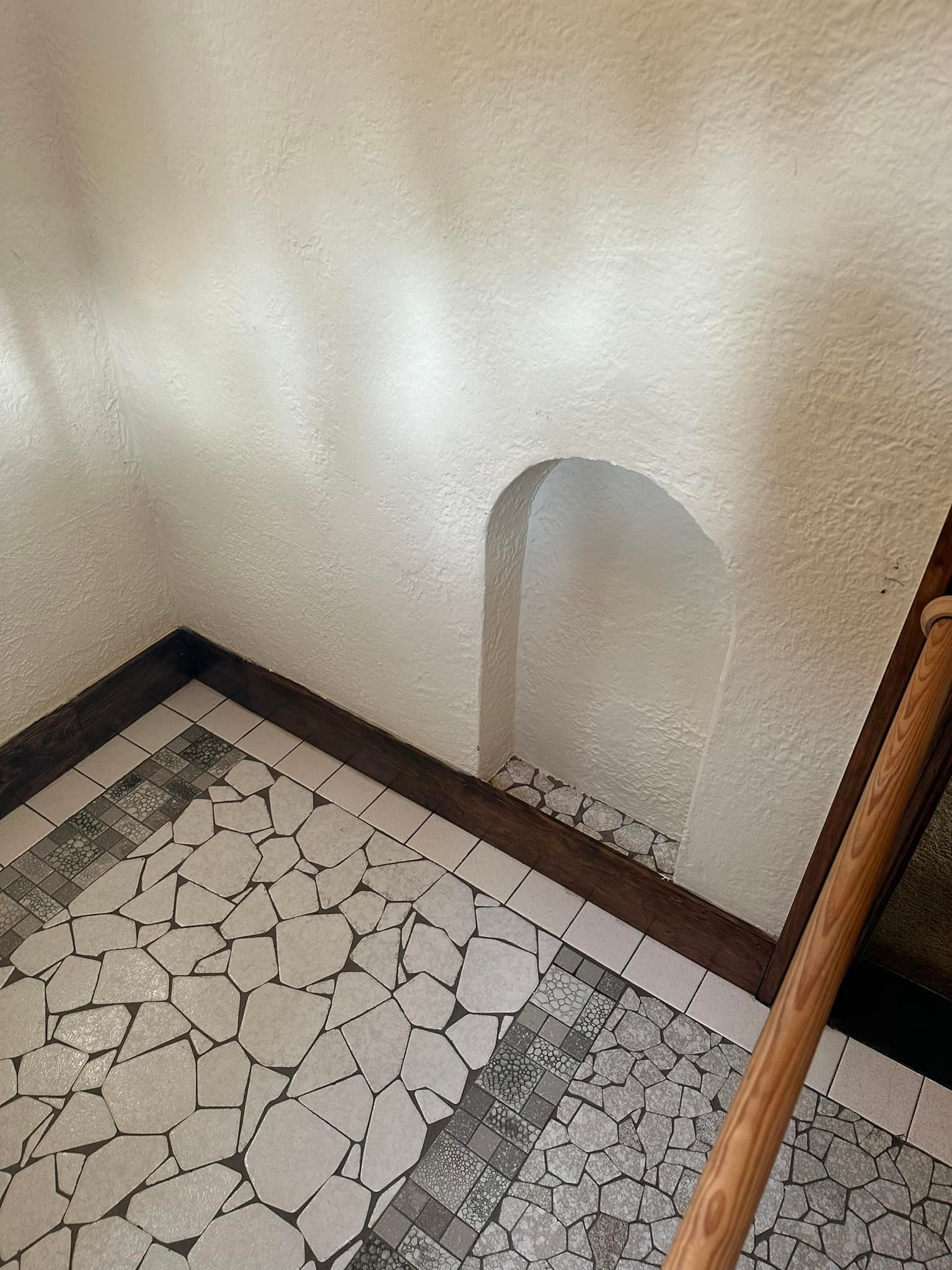
Any idea what this little niche was for? There’s no sign of a patched wall on the other side. It’s in a front entry.

Some of the people opinions on it:
1. Could it be for an umbrella stand?

What do you think?
Sometimes the smallest architectural detail can spark the biggest curiosity. A mysterious nook in a hallway, a boarded-off door frame, or a tiny hatch in a pantry can tell a story about how people used to live—long before modern conveniences reshaped the way homes were designed.
This time, the mystery revolves around a little recessed niche located in the front entry of an older home. At first glance, it looks almost accidental—too small for storage, too shallow to be a closet, and with no clues hidden on the reverse side of the wall. Yet, these strange structural pockets were once surprisingly common, each designed with a job to do.
A Feature With a Forgotten Purpose
A niche like this—carved into the wall close to the front door—might appear insignificant today, but historically it served a specific function. Early homes relied on architectural nooks to hold practical necessities that we now take for granted. Before modern mudrooms, mechanical heating systems, and electric lighting, the entryway was a busy crossroads where tools, outerwear, and fire-related items were managed.
Possible Identity #1: Lantern or Candle Alcove
Long before electricity illuminated every corner, homeowners needed a safe place to keep a lantern or candle readily available near the entrance.
A shallow niche protected the flame from drafts yet kept the light visible enough to guide a person unlocking or securing the front door at night.
If the niche sits at roughly eye or chest level, this is one of the strongest possibilities.
Possible Identity #2: Telephone Recess (Early 20th Century)
By the early 1900s, another household essential needed a home: the wall-mounted telephone.
Many homes built between the 1910s and 1940s included small recessed wall pockets near the main entrance or staircase for exactly that reason.
While today’s telephones are mobile and wireless, families once shared a single phone—often placed where everyone could reach it, but where it wouldn’t clutter precious counter space.
If the niche is square-shaped and sits at standing height, the phone shelf explanation fits neatly.
Possible Identity #3: Key, Mail, or Calling Card Holder
In the Victorian and Edwardian eras, the front entrance served as a greeting zone for visitors—often before guests were invited deeper into the home.
Households commonly kept trays or cubbies near the door for:
• brass keys
• calling cards
• deliveries
• messages
• gloves or small personal items
A recessed wall pocket prevented these small objects from being knocked loose or misplaced.
Possible Identity #4: Religious or Decorative Display Niche
Not every niche held a purely practical role.
In some households—especially those influenced by European design—entryway alcoves displayed small statues, religious symbols, vases, or family heirlooms.
These niches often carried a sense of welcome and identity, announcing who lived there before the rest of the house spoke.
If the niche has any remaining molding, rounded corners, or paint differences, it might have once showcased a treasured item.
Why There’s No Sign on the Other Side
The mystery deepens when the opposite wall shows no sign of alteration.
But this actually supports the idea that the feature was intentional and original.
Builders sometimes framed shallow pockets between studs, especially in plaster-lathe walls, meaning nothing needed to be removed or patched later.
Unlike closets or cabinets, these alcoves didn’t rely on structural modifications—they simply claimed unused cavity depth.
More Than a Quirk—A Time Capsule
While modern homes rarely include such specialized recesses, stumbling across one today offers a glimpse into how houses functioned before modern design streamlined everything.
Every unexplained nook represents a clue: to technology, to daily habits, and to the needs of the families who first passed through that front doorway.
So, although its exact purpose may remain uncertain without house records or local anecdotes, this modest little niche likely served as something practical, important, and perhaps even cherished—whether it held a glowing lantern, the family telephone, or a set of keys freshly placed after a long journey home.
A tiny feature with a big story—hidden in plain sight.