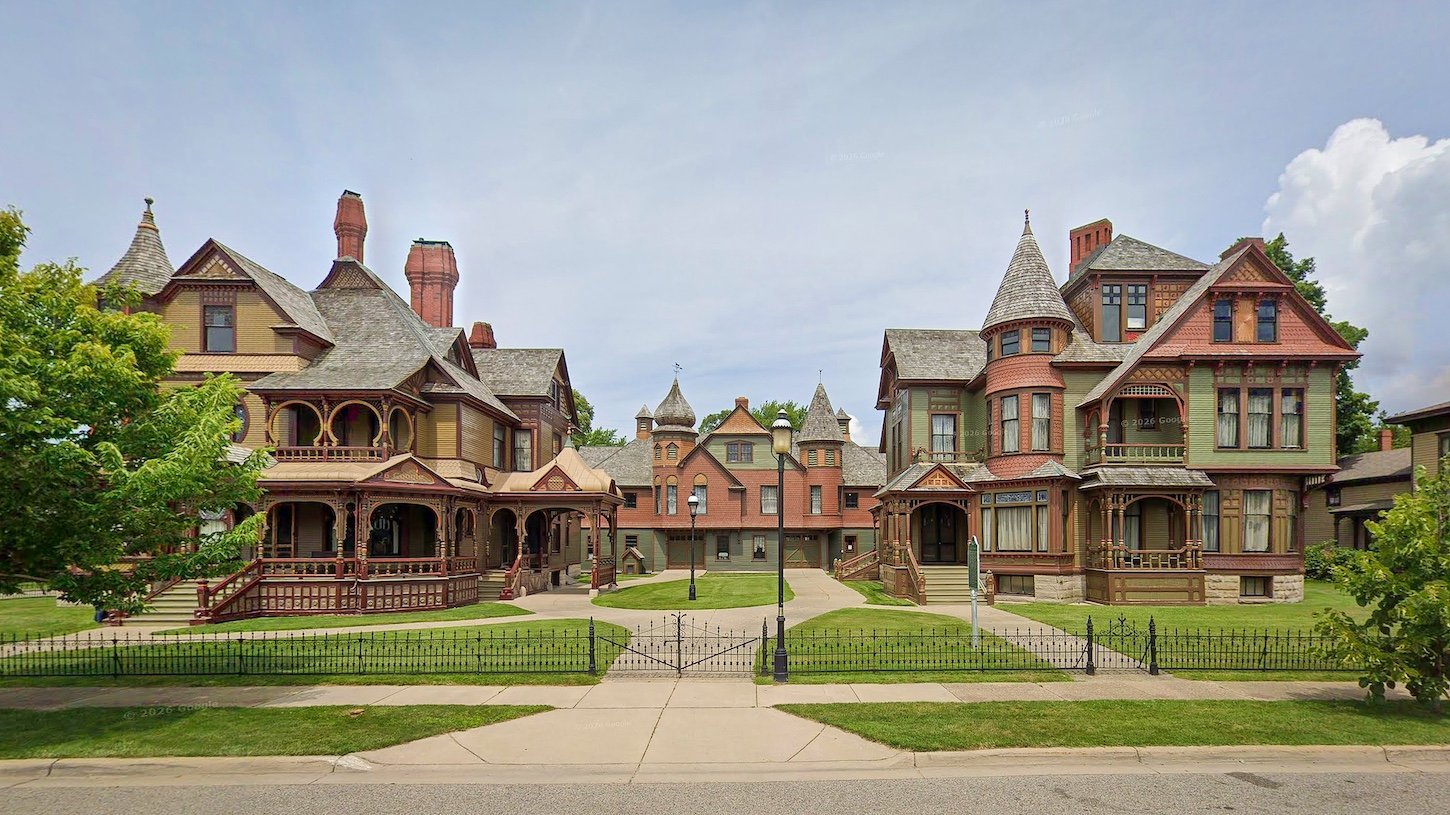
Historic 1887 Hackley & Hume Mansions in Muskegon, Michigan
Standing as remarkable reminders of Michigan’s prosperous lumber era, the Hackley and Hume Mansions in Muskegon offer a glimpse into the lives of two of the city’s most influential businessmen. Built during the late 19th century, these neighboring Victorian residences reflect the wealth, ambition, and architectural tastes of an era when the lumber industry helped transform Muskegon into a thriving industrial center. Their story is closely connected to the friendship and business partnership between Charles Hackley and Thomas Hume, two men whose success left a lasting mark on the community.
Thomas Hume’s journey to Muskegon began in 1870, when the Irish immigrant arrived in the growing Michigan city in search of new opportunities. He soon found employment with Charles Hackley’s lumber company, initially working as a bookkeeper. Through years of dedication and business experience, Hume gradually became an increasingly important figure within the company. By 1881, his contributions and growing responsibilities had earned him a position as a full partner in the business. Together, Hackley and Hume expanded their lumber operations and developed additional interests in manufacturing and finance, building a successful business empire during one of Michigan’s most prosperous periods.
As their fortunes grew, the two partners decided to establish their family residences beside one another. In 1887, Charles Hackley purchased a desirable corner property at the intersection of Webster Avenue and Sixth Street. He subsequently sold half of the land to Hume, allowing both men to construct impressive homes on neighboring lots. Rather than choosing separate locations throughout the city, they created a distinctive residential setting that reflected their close professional relationship and shared success.

The architectural designs for both mansions were entrusted to David S. Hopkins, a respected architect known for his work in the region. Although the residences were built side by side, each possessed its own architectural personality and carefully considered details. Construction was completed in 1888, resulting in two elaborate homes that showcased the craftsmanship and decorative preferences associated with wealthy American families during the Victorian period. Their impressive scale, intricate exterior features, and elegant interiors made the properties notable additions to Muskegon’s residential landscape.
Thomas Hume’s residence gradually evolved as his family’s needs changed. Over the years, he expanded the original structure with additional living spaces, including a library, a dining room, and a sleeping porch. These improvements provided greater comfort while preserving the home’s original character. The library offered a quiet place for reading and private activities, while the expanded dining room created additional space for family gatherings and entertaining guests. The sleeping porch was another popular feature of the period, allowing residents to enjoy fresh air during warmer months. Hume continued living in the mansion until his death in 1920.
Following Hume’s passing, the property entered a new chapter, reflecting the changing needs of the community. By the 1950s, the historic residence had been adapted for use as a day care center. Although this new purpose allowed the building to remain in use, its original architectural and historical significance eventually attracted renewed attention from preservation advocates.

A major turning point came in 1971, when the property was transferred to the Hackley Heritage Association. This organization helped secure the mansion’s future and supported efforts to restore and preserve its historic features. Through professional restoration work, the residence was carefully brought back to reflect its appearance and character during the period when the Hume family occupied it.
Today, the Hackley and Hume Mansions are recognized as important historical landmarks in Muskegon. Open to the public, they allow visitors to explore the architecture, craftsmanship, and domestic life associated with Michigan’s lumber boom. Beyond their impressive appearance, the neighboring homes tell the story of two businessmen whose partnership helped shape the economic development of their city.
More than a century after their construction, these historic residences continue to connect modern visitors with Muskegon’s past. Their preservation ensures that the legacy of Charles Hackley and Thomas Hume, along with the remarkable prosperity of the lumber era, remains part of the community’s architectural and cultural heritage.